|
Sysoft ® |

|

|
Amarco case study: An Enterprise-Wide Information System
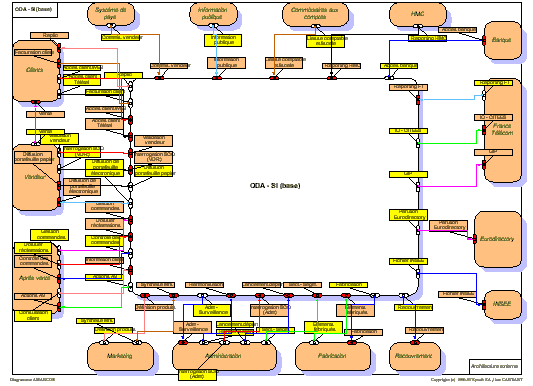
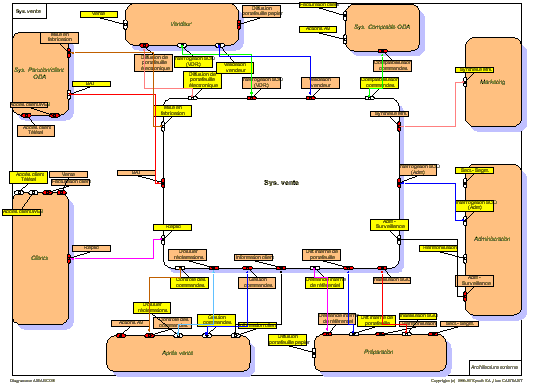
The external architecture puts boundaries around the system. So we could better see what was outside, and which were the services that the Information system exchanged with the external partners.
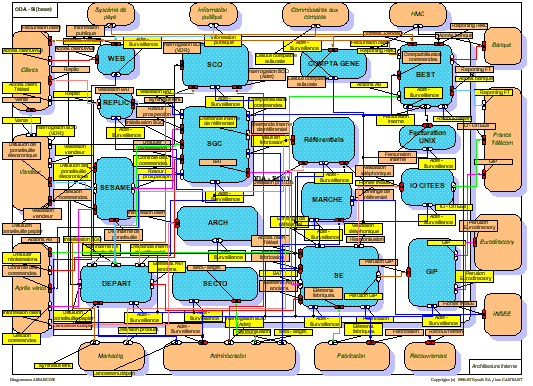
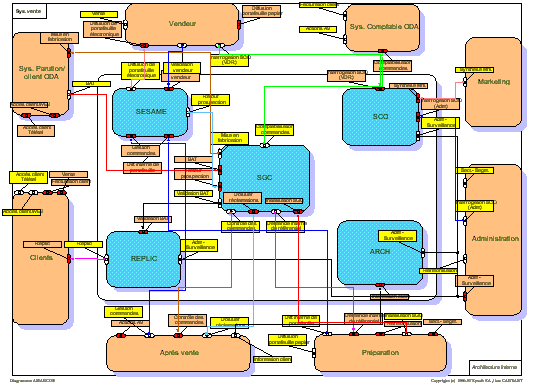
The internal architecture shows the components, as they are seen today (quite a challenge for Amarco Cartography!). The service points seen from the exterior are now mapped on internal objects.
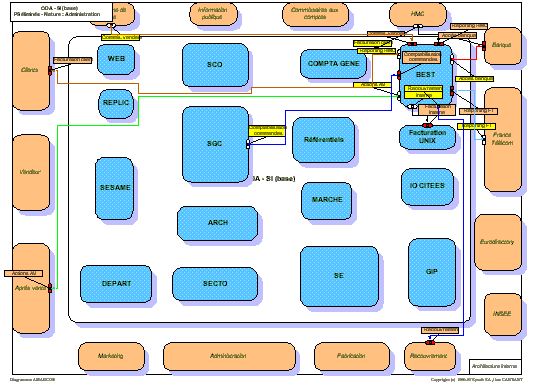
We can display only the connections relative to an object. It is clear what service points (interfaces) are to be respected if we proceed to a replacement (technology change, for example).
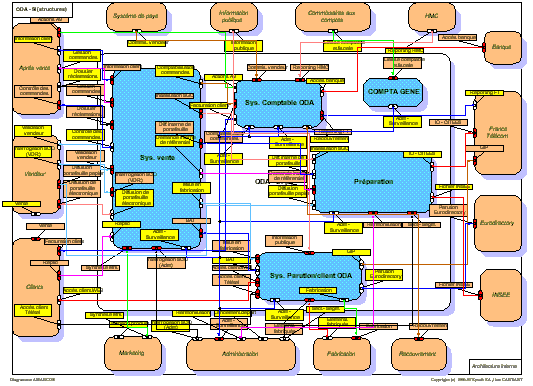
To help understand the system, we reorganized it (virtually). This was done by assembling some of the contained objects in higher objects. The picture is more simple, that is, easier to understand. There is no real intervention on the system itself.
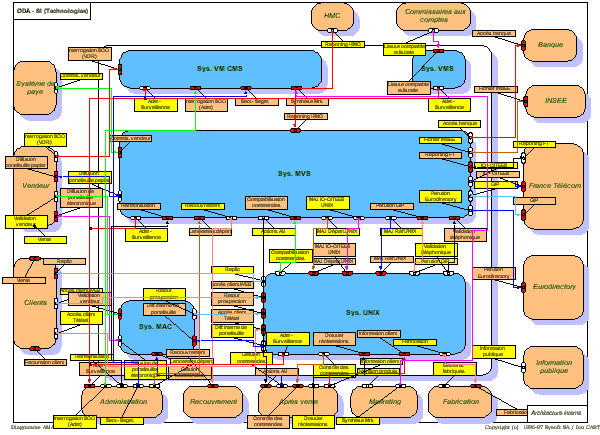
The system may be represented also by taking into account the various information technologies that are present in its structure. The service points are scattered on various technology -oriented infrastructures. Thus we can see the various exchanges that take place between technology environments. A more detailed view may show the effective communication links, with service points like TCP/IP, X25, SNA etc.
If we take into account one of the new objects, we can present its external architecture, with all its neighbors.
This object can now be displayed with the component parts that were chosen to be assembled.
|
||||||||||||||||||||||||||||||
|